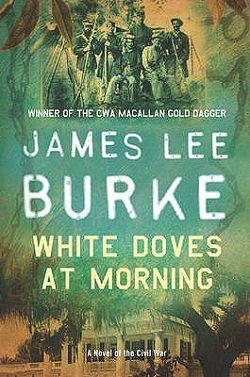
In White Doves at Morning, James Lee Burke embarks on a remarkable journey through the tumultuous landscape of the American Civil War and its aftermath, weaving a narrative that is as rich in historical detail as it is in emotional depth. This historical novel marks a significant departure from Burke's well-known crime fiction, yet it retains the hallmarks of his writing style: lyrical prose, complex characters, and a vivid sense of place. Burke's ability to capture the essence of human experience against the backdrop of historical events is on full display, making this novel a compelling read for both fans of his previous work and newcomers alike.
At the heart of the story are two contrasting protagonists: Robert Perry, a scion of a wealthy slave-owning family, and Willie Burke, a poor Irish immigrant. Their paths converge in a world rife with conflict, both personal and political. Burke masterfully explores the moral dilemmas faced by these characters as they enlist in the Confederate Army, driven by a sense of duty yet grappling with their own beliefs about slavery and justice. This internal struggle is emblematic of the broader societal conflicts of the time, and Burke does not shy away from depicting the complexities of loyalty, love, and betrayal.
One of the most striking aspects of White Doves at Morning is its exploration of love in its many forms. The relationship between Willie and Flower Jamison, a young black slave, serves as a poignant focal point. Their bond transcends the oppressive social structures of the era, highlighting the power of love and friendship in the face of adversity. Flower's journey towards literacy, aided by Willie and Abigail Dowling, an abolitionist, symbolizes hope and resilience. Burke's portrayal of Flower is particularly noteworthy; she is not merely a victim of her circumstances but a vibrant character with agency, embodying the struggle for freedom and self-determination.
The novel's setting is as much a character as the individuals who inhabit it. Burke's evocative descriptions of Louisiana's landscapes—the swamps, plantations, and towns—create a palpable sense of place that immerses the reader in the historical context. The contrast between the beauty of the natural world and the brutality of human conflict serves to heighten the emotional stakes of the narrative. Burke's ability to paint vivid imagery with his words enhances the reader's experience, making the historical events feel immediate and relevant.
Burke's exploration of villainy is equally compelling. The characters of Clay Hatcher and Rufus Atkins represent the darker aspects of human nature, embodying the racism and brutality that permeated the post-war South. Hatcher, described as "pure white trash," and Atkins, a former overseer turned labor manager, are not just antagonists; they are products of their environment, illustrating the pervasive social decay and moral corruption of the time. Burke's nuanced portrayal of these villains adds depth to the narrative, prompting readers to reflect on the complexities of morality and the human condition.
Another significant theme in the novel is the struggle for identity and belonging. Characters like Abigail Dowling, who defy societal norms to fight for justice, challenge the status quo and seek to carve out their own identities in a world that often seeks to define them by their race or class. Burke's exploration of these themes resonates deeply, particularly in today's context, where issues of race, privilege, and justice remain at the forefront of societal discourse.
Burke's prose is nothing short of poetic, with passages that linger in the mind long after reading. His ability to evoke emotion through language is a testament to his skill as a storyteller. The dialogue is sharp and authentic, capturing the vernacular of the time while also revealing the inner lives of the characters. This attention to detail enriches the reading experience, allowing readers to connect with the characters on a profound level.
In comparison to other historical novels, such as The Known World by Edward P. Jones or Beloved by Toni Morrison, Burke's work stands out for its blend of personal and political narratives. While Jones and Morrison delve deeply into the legacy of slavery and its impact on identity, Burke's approach is more focused on the interplay of individual choices against a backdrop of historical upheaval. This makes White Doves at Morning a unique contribution to the genre, offering a fresh perspective on familiar themes.
Overall, White Doves at Morning is a powerful and evocative novel that showcases James Lee Burke's exceptional talent as a writer. It is a story of love, conflict, and the enduring human spirit, set against one of the most tumultuous periods in American history. Burke's ability to intertwine personal narratives with broader historical themes creates a rich tapestry that resonates with readers on multiple levels. This novel is not just a departure from Burke's previous work; it is a testament to his versatility and depth as a storyteller.
For those seeking a profound exploration of love, morality, and the complexities of human nature set against a historical backdrop, White Doves at Morning is an essential read. Burke's masterful storytelling will leave readers reflecting on the intricacies of the human experience long after the final page is turned.