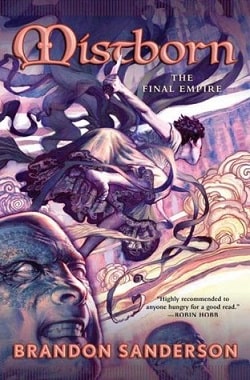
Mistborn: The Final Empire, the first book in Brandon Sanderson's acclaimed Mistborn series, is a towering achievement within the fantasy genre, seamlessly weaving intricate world-building with a compelling narrative and deep, resonant themes. As the initial foray into what would become a sprawling series, this novel not only introduces a riveting universe but also sets a high benchmark for inventive fantasy and complex character development.
The story is set in a grim, dystopian world ruled by the immortal Lord Ruler, who has dominated the Final Empire for over a thousand years. The empire is starkly divided along class lines, with the aristocracy wielding great power and the skaa, or slaves, suffering in unmitigated misery. Against this backdrop, Sanderson introduces a revolutionary plot, led by Kelsier, a charismatic and enigmatic skaa who possesses the powers of a Mistborn—beings who can ingest and "burn" metals to unleash supernatural abilities. Kelsier's team plans nothing less than the overthrow of the seemingly invincible Lord Ruler.
Key to their strategy is Vin, a street-smart but wary young woman, who discovers her own latent Mistborn abilities and quickly becomes central to Kelsier’s plans. Vin’s character development is one of the most compelling aspects of the book; her transformation from a mistrustful, isolated individual into a powerful figure who finds strength in camaraderie and purpose is both credibly and satisfyingly rendered. Sanderson depicts her internal conflicts and burgeoning relationships with the crew with a sensitivity that adds emotional depth to the thrilling external conflicts.
Sanderson's magic system, termed Allomancy, is particularly noteworthy for its originality and complexity. Allomancers derive their powers from metals, with different metals conferring different powers. This system is meticulously crafted, with its own set of rules and limitations, which Sanderson integrates smoothly into the plot, enhancing both the action sequences and the plot’s strategic depth. This intricate detailing extends to the political and social organization of the Final Empire, which is equally well-crafted, offering a clear view of the oppressions and manipulations inherent in the Lord Ruler's regime.
The plot itself is dense and carefully constructed. Kelsier's crew plans capers that combine elements of a heist with those of guerrilla warfare, involving intricate planning, subterfuge, and both physical and psychological battles. Pacing is brisk, with climactic sequences that are both action-packed and intellectually stimulating. Each victory and setback is part of an elaborate chess game between the rebels and the empire, with high stakes and uncertain outcomes keeping the tension taut throughout the book.
Thematically, the novel explores issues of power, identity, and revolution. Through characters like Vin and Kelsier, as well as their diverse crew, Sanderson examines what it means to seek power and to wield it, to liberate oneself and others, and to create identity in a world where roles are rigidly defined. The moral complexities of a revolution—both in terms of its ideals and its realities—are portrayed with nuance, as characters grapple with the personal and ethical implications of their fight against a deeply entrenched, evil order.
Another significant accomplishment of Mistborn: The Final Empire is its attention to emotional authenticity. The characters are deeply human, with fears, hopes, flaws, and virtues that render them particularly relatable and endearing. This emotional groundwork enriches the narrative, making both the characters’ successes and failures resonate well beyond the immediate confines of the plot.
Moreover, Sanderson's prose is clear, vivid, and purpose-driven. While it serves primarily to carry the story forward, it also offers moments of poetic beauty and philosophical reflection, adding layers of depth to what could otherwise have been a mere fantasy adventure. His ability to balance explanation and action, providing enough information to keep readers engaged without bogging down the narrative, is exemplary.
Mistborn: The Final Empire not only sets the stage for the subsequent books in the series but stands firm as a powerful narrative in its own right. It is a compelling blend of adventure, philosophy, and characterization, stamped with the indelible mark of a creator at the height of his storytelling powers. For lovers of fantasy seeking both depth and diversion, it promises and delivers a journey that is as thought-provoking as it is thrilling.