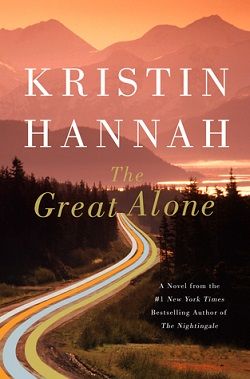
'The Great Alone' by Kristin Hannah is a hauntingly beautiful novel that explores the complexities of love, survival, and the human spirit against the backdrop of the unforgiving Alaskan wilderness. Set in 1974, the story follows the Allbright family—Ernt, Cora, and their thirteen-year-old daughter, Leni—as they embark on a journey to escape their troubled past and seek solace in the wild. However, what begins as a quest for freedom quickly spirals into a harrowing tale of survival, both against nature and within the confines of their own family dynamics.
At the heart of the novel is the character of Ernt Allbright, a Vietnam War veteran whose experiences have left him deeply scarred and volatile. His transformation from a loving father to a man consumed by anger and paranoia is depicted with raw honesty. Hannah skillfully illustrates how Ernt's mental health deteriorates as the harsh Alaskan winter sets in, creating an atmosphere of tension and fear within the family. This portrayal of a man grappling with his demons serves as a poignant reminder of the lasting effects of trauma, not just on the individual but also on those around them.
Cora, Leni's mother, is another compelling character whose unwavering love for her husband blinds her to the dangers lurking within their home. Her willingness to follow Ernt into the wild, despite the evident risks, speaks to the complexities of love and loyalty. Hannah captures the essence of a woman torn between her devotion to her husband and her instinct to protect her daughter. As the story unfolds, Cora's character evolves, revealing her strength and resilience in the face of adversity. The relationship between Cora and Leni is particularly touching, showcasing the bond between mother and daughter as they navigate the treacherous waters of their family life.
Leni, the young protagonist, is a beautifully crafted character who embodies the struggles of adolescence amidst chaos. Her journey of self-discovery is intricately woven into the narrative, as she grapples with her identity, her family's tumultuous dynamics, and her longing for a sense of belonging. The Alaskan landscape serves as both a character and a metaphor in Leni's life—initially a place of hope and adventure, it soon becomes a symbol of isolation and danger. Hannah's vivid descriptions of Alaska's breathtaking beauty juxtaposed with its brutal realities create a rich tapestry that immerses readers in the setting.
The themes of survival and resilience are central to 'The Great Alone'. As the Allbright family faces the harshness of their environment, they are forced to confront their internal struggles. The novel delves into the idea that true survival goes beyond physical endurance; it encompasses emotional and psychological strength as well. Hannah masterfully illustrates how the characters must learn to rely on themselves and each other in a world where external help is scarce. The isolation of their cabin becomes a crucible for their relationships, revealing the fragility of love and the strength that can emerge from adversity.
Another significant theme is the exploration of domestic abuse and its impact on family dynamics. Hannah does not shy away from depicting the darker aspects of Ernt's character, and the effects of his violence ripple through the lives of Cora and Leni. This portrayal is both heartbreaking and necessary, as it sheds light on the complexities of abusive relationships and the difficult choices faced by those involved. The novel serves as a reminder that love can sometimes be intertwined with pain, and that the journey to break free from such cycles is fraught with challenges.
Hannah's writing is both lyrical and poignant, drawing readers into the emotional landscape of the characters. Her ability to evoke a sense of place is remarkable; the Alaskan wilderness becomes a character in its own right, reflecting the beauty and brutality of nature. The long, sunlit days of summer contrast sharply with the oppressive darkness of winter, mirroring the internal struggles of the Allbright family. This duality enhances the narrative, creating a palpable tension that keeps readers engaged.
In comparison to other works that explore similar themes, such as 'The Nightingale', also by Kristin Hannah, 'The Great Alone' stands out for its raw exploration of mental illness and domestic strife. While both novels delve into the resilience of women in the face of adversity, 'The Great Alone' offers a more intimate look at the complexities of familial relationships and the impact of trauma on those bonds. The stark setting of Alaska adds an additional layer of challenge, making the characters' struggles all the more poignant.
Overall, 'The Great Alone' is a powerful and evocative novel that will resonate with readers long after they turn the last page. Kristin Hannah has crafted a story that is both heart-wrenching and hopeful, exploring the depths of human emotion and the strength that can be found in the most challenging of circumstances. It is a testament to the resilience of the human spirit and the enduring power of love, even in the face of darkness.
For those seeking a gripping tale of survival, love, and the complexities of family, 'The Great Alone' is a must-read. It invites readers to reflect on their own relationships and the lengths they would go to protect those they love. This novel is not just a story of survival in the wilderness; it is a profound exploration of what it means to truly live and love in a world that can often feel unforgiving.