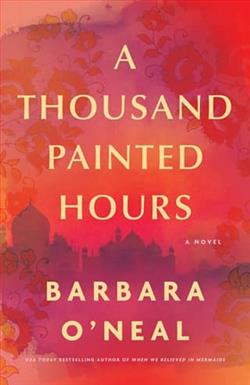
Barbara O'Neal's novel, A Thousand Painted Hours, is a poignant exploration of love, art, and resilience set against the backdrop of two contrasting worlds—colonial India and wartime London. This historical fiction weaves a rich tapestry of themes that resonate deeply with readers, offering a narrative that is as vibrant as the colors on Elsie Turner's canvases.
The story centers around Elsie Turner, an artist whose life is defined by her passion for painting and her indomitable spirit. In the midst of the London Blitz, Elsie clings to her art, using it as a refuge from the chaos surrounding her. O'Neal skillfully captures the tension of wartime London, illustrating how the external destruction mirrors the internal turmoil of her protagonist. Elsie's determination to preserve the vibrancy of her world through art is a testament to the enduring power of creativity, even in the darkest times.
One of the most compelling aspects of A Thousand Painted Hours is its exploration of cross-cultural relationships. Elsie's bond with Tanveer Singh, a Sikh prince, is a central thread that runs through the narrative. Their relationship, which begins in the idyllic setting of Nainital, India, is portrayed with sensitivity and depth. O'Neal delves into the complexities of their connection, highlighting the challenges posed by cultural divides and societal expectations. The shared sketchbooks and secret correspondence between Elsie and Tanveer serve as a metaphor for their shared dreams and aspirations, transcending the barriers that separate them.
The character development in this novel is nuanced and layered. Elsie, in particular, is a well-rounded character whose growth is both believable and inspiring. Her journey from a young girl in colonial India to a resilient woman in war-torn London is marked by significant personal and emotional milestones. O'Neal paints Elsie's internal struggles with a deft hand, allowing readers to empathize with her longing for a past that seems irretrievably lost. Tanveer, too, is a character of depth, embodying the hopes and dreams of a generation caught between tradition and modernity.
O'Neal's writing style is both lyrical and evocative, capturing the essence of the settings and the emotional landscapes of her characters. Her prose is rich with imagery, bringing to life the lush beauty of India and the stark reality of London during the Blitz. The juxtaposition of these two worlds is handled with finesse, highlighting the contrasts and connections that define Elsie's life. The author's ability to weave historical detail into the narrative without overwhelming the story is commendable, providing a backdrop that enhances rather than detracts from the characters' journeys.
The emotional impact of A Thousand Painted Hours is profound, leaving readers with a lingering sense of nostalgia and introspection. O'Neal explores themes of love, loss, and survival with a sensitivity that resonates on a universal level. The novel's exploration of the sacrifices made in the name of love and the enduring nature of true connection is both heart-wrenching and uplifting. Readers are invited to reflect on their own experiences of love and resilience, making the story not just a historical journey, but a personal one as well.
In comparison to other works in the historical fiction genre, O'Neal's novel stands out for its focus on art as a means of survival and expression. Similar to Kristin Hannah's The Nightingale, which also explores the resilience of women during wartime, A Thousand Painted Hours offers a fresh perspective through the lens of an artist. The novel's emphasis on cross-cultural relationships and the impact of colonialism adds a layer of complexity that enriches the narrative.
Overall, A Thousand Painted Hours by Barbara O'Neal is a beautifully crafted novel that will appeal to fans of historical fiction and those who appreciate stories of love and resilience. Its rich themes, well-developed characters, and evocative writing make it a standout addition to the genre. O'Neal has created a work that not only entertains but also invites readers to ponder the enduring power of art and the human spirit in the face of adversity.