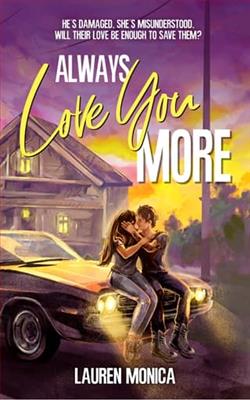
Lauren Monica's "Always Love You More" delves into the intricate world of angsty coming-of-age romance, a genre beloved for its exploration of raw emotions and the tumultuous journey to self-discovery. This prequel to "A Yes or No Question" stands on its own, offering readers a poignant narrative that is both heart-wrenching and hopeful. At its core, the novel is a study of two damaged souls, Jameson Baxston and Sam Barlowe, who find solace in each other's company amidst their chaotic lives.
The character development in "Always Love You More" is one of its standout features. Jameson Baxston is introduced as a broody bad-boy, a character archetype that is both familiar and compelling. Raised in a world of crime, his demeanor is cold and calculated, a defense mechanism honed by years of survival in a ruthless environment. Yet, beneath this hardened exterior lies a vulnerability that Lauren Monica skillfully unveils as the story progresses. Jameson's journey is reminiscent of classic literary bad boys, drawing parallels to characters like Heathcliff from Emily Brontë's "Wuthering Heights," who are driven by passion and a desire for redemption.
In contrast, Sam Barlowe is the embodiment of a black cat FMC, elusive and misunderstood. Her difficult home life and the constant feeling of being an outsider resonate deeply with readers who have ever felt out of place. Sam's character is richly layered, her attitude a shield against the world that often seems to conspire against her. The dynamic between Sam and Jameson is electric, their chemistry palpable from their first interaction. Monica crafts their relationship with a delicate balance of tension and tenderness, making their connection both believable and compelling.
The themes explored in "Always Love You More" are universal yet deeply personal. The concept of found family is central to the narrative, as both protagonists seek belonging and acceptance outside their dysfunctional familial structures. This theme is beautifully woven into the story, offering a sense of hope and the possibility of healing through chosen connections. Additionally, the novel tackles the themes of self-doubt and self-destruction, portraying how past traumas can shape one's present and future. The emotional depth with which Monica handles these themes is reminiscent of works by authors like Sarah Dessen and John Green, who are known for their ability to capture the complexities of adolescence and young adulthood.
Lauren Monica's writing style is both lyrical and accessible, striking a balance that draws readers into the world she has created. Her prose is imbued with a sense of urgency, reflecting the inner turmoil of her characters. This stylistic choice enhances the emotional impact of the narrative, allowing readers to fully immerse themselves in Jameson and Sam's journey. The dialogue is sharp and authentic, capturing the essence of youthful angst and the struggle for identity. Monica's ability to convey deep emotions through simple yet powerful language is a testament to her skill as a storyteller.
The emotional impact of "Always Love You More" is profound, leaving readers with a lingering sense of empathy and understanding for its characters. The novel's exploration of love in its various forms—romantic, familial, and platonic—offers a nuanced perspective on what it means to truly connect with another person. As Jameson and Sam navigate their relationship amidst personal and external challenges, readers are reminded of the resilience of the human spirit and the transformative power of love.
In conclusion, "Always Love You More" by Lauren Monica is a compelling addition to the coming-of-age romance genre. Its exploration of complex themes, coupled with well-developed characters and a captivating writing style, makes it a must-read for fans of angsty romance and those who appreciate a story of redemption and hope. The novel's ability to resonate with readers on an emotional level ensures its place alongside other beloved works in the genre. Whether read as a standalone or as a prequel to "A Yes or No Question," this novel is sure to leave a lasting impression on its audience.