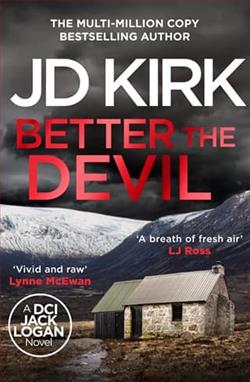
J.D. Kirk's novel, Better the Devil, is a gripping addition to the crime thriller genre, weaving a complex narrative that explores themes of redemption, trust, and the blurred lines between justice and revenge. Set against the evocative backdrop of the Scottish Highlands, the story is as much about the rugged landscape as it is about the characters who inhabit it. Kirk's ability to intertwine setting with narrative is reminiscent of Ian Rankin's use of Edinburgh in his Rebus series, where the environment becomes a character in its own right.
The novel centers on Bosco Maximuke, a former drug kingpin recently released from prison, who insists he has reformed and seeks to reconnect with his estranged daughter, Olivia. However, when members of the criminal network that filled the void during his incarceration start turning up dead, suspicion naturally falls on Bosco. This setup creates a tension-filled narrative where the reader is constantly questioning Bosco's true intentions. Is he genuinely reformed, or is he orchestrating a deadly game of revenge?
DCI Jack Logan, the protagonist, is reluctantly drawn into Bosco's orbit when Bosco seeks his help. Their history is fraught with animosity, adding layers of complexity to their interactions. Logan's character is well-developed, embodying the archetype of the weary detective who is both cynical and deeply moral. His internal struggle with whether to trust Bosco is palpable and drives much of the novel's emotional impact. The fact that Olivia, Bosco's daughter, now lives with Logan adds a personal stake to the investigation, further complicating Logan's decisions.
Kirk excels in character development, particularly in his portrayal of Logan and Bosco. Logan is a character who embodies the classic detective archetype but is given depth through his personal connections and moral dilemmas. Bosco, on the other hand, is a fascinating character study in redemption and the possibility of change. The tension between his past and his supposed new leaf is a central theme that Kirk explores with nuance and sensitivity. The dynamic between these two characters is reminiscent of the complex relationships found in Michael Connelly's Harry Bosch series, where personal history and professional duty often collide.
The writing style in Better the Devil is both engaging and accessible, with Kirk employing a straightforward narrative that keeps the reader hooked from beginning to end. His use of dialogue is particularly effective, capturing the nuances of Scottish dialect and adding authenticity to the characters' voices. The pacing is well-managed, with Kirk skillfully balancing action sequences with moments of introspection and character development. This balance ensures that the narrative remains compelling without sacrificing depth.
Emotionally, the novel resonates on multiple levels. The theme of trust is central, not only in the context of Logan and Bosco's relationship but also in the broader sense of community and the criminal underworld. The question of whether people can truly change is explored through Bosco's interactions with his daughter and the other characters, creating a narrative that is as much about personal redemption as it is about solving a crime. This exploration of human nature and morality adds a layer of depth that elevates the novel beyond a simple thriller.
In terms of genre, Better the Devil fits comfortably within the crime thriller category, yet it distinguishes itself through its rich character development and exploration of complex themes. Fans of Tana French or Val McDermid will likely appreciate Kirk's ability to weave a narrative that is both suspenseful and thought-provoking. The novel's setting in the Scottish Highlands adds an atmospheric quality that enhances the story's tension and drama, making it a must-read for those who enjoy a strong sense of place in their thrillers.
Overall, J.D. Kirk's Better the Devil is a compelling read that offers more than just a thrilling plot. It delves into the intricacies of human relationships and the moral ambiguities that define them. With well-drawn characters, a gripping narrative, and a setting that is both beautiful and foreboding, the novel is a standout in the crime thriller genre. Whether you are a long-time fan of Kirk's work or new to his writing, this book promises to be an engaging and thought-provoking addition to your reading list.