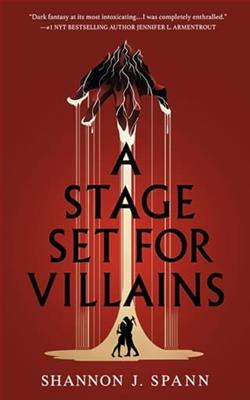
Shannon J. Spann's A Stage Set for Villains is a mesmerizing foray into a world where the divine has been replaced by the theatrical, and the stage is set for a gripping tale of ambition, survival, and the blurred lines between heroism and villainy. This novel is a compelling blend of fantasy and drama, where the stakes are as high as the curtains that rise on the Playhouse's enchanted performances.
The premise of the novel is immediately captivating: the gods are dead, and in their place, the Players of the Playhouse wield power that is both revered and feared. Spann crafts a world where performances are not mere entertainment but potent forces capable of altering reality itself. This setting is not just a backdrop but a living, breathing entity that shapes the narrative and the characters within it. The Playhouse is a character in its own right, with secrets and a dark allure that draws both the characters and the readers into its depths.
At the heart of the story is Riven Hesper, an eighteen-year-old protagonist whose life is marked by a curse inflicted by a Player. Riven's journey is one of desperation and determination, as she seeks to reverse her fate by infiltrating a deadly competition that promises immortality. Spann expertly develops Riven's character, painting her as a complex figure who is both relatable and enigmatic. Her motivations are clear, yet her path is fraught with moral ambiguity, forcing readers to question whether she is truly the hero of her story or the villain.
The character of Jude, the Playhouse's Lead Player, adds another layer of intrigue to the narrative. Jude is portrayed as both charismatic and ruthless, a figure whose charm is as dangerous as his Craft. The dynamic between Riven and Jude is electric, filled with tension and unpredictability. Their interactions are a dance of power and vulnerability, with each character holding secrets that could tip the balance of their relationship. Spann's ability to craft such nuanced characters is a testament to her skill as a storyteller.
The themes explored in A Stage Set for Villains are both timeless and timely. The novel delves into the nature of power and the cost of ambition, questioning what one is willing to sacrifice for survival and success. The idea that the Playhouse can rewrite stories is a powerful metaphor for the malleability of identity and destiny. Riven's struggle to define her own narrative in a world that seeks to control it is a poignant reflection on the human desire for agency and self-determination.
Spann's writing is lush and evocative, painting vivid images of the Playhouse's performances and the world beyond its walls. Her prose is both poetic and precise, capturing the beauty and brutality of the story's setting. The pacing of the novel is expertly managed, with tension building steadily towards a climax that is both satisfying and thought-provoking.
Comparisons to Caraval and One Dark Window are apt, as Spann's novel shares the same sense of wonder and danger found in these works. Like Caraval, A Stage Set for Villains immerses readers in a world where reality is fluid and the line between illusion and truth is blurred. Similarly, the dark, atmospheric tone of One Dark Window is echoed in Spann's narrative, where shadows lurk at the edges of the stage and the threat of violence is ever-present.
However, A Stage Set for Villains stands out for its exploration of the concept of villainy. Spann challenges the traditional notions of good and evil, presenting a protagonist who is willing to embrace darkness to achieve her goals. This moral complexity adds depth to the story, inviting readers to question their own perceptions of right and wrong.
Overall, A Stage Set for Villains is a masterful blend of fantasy and drama, with a richly imagined world and compelling characters. Shannon J. Spann has crafted a tale that is both entertaining and thought-provoking, leaving readers to ponder the nature of power, identity, and the stories we tell ourselves. For those who enjoy dark, immersive fantasies with a touch of theatrical flair, this novel is a must-read.
In conclusion, Spann's novel is a testament to the power of storytelling, both within its pages and beyond. It is a reminder that the stories we create can shape our reality, for better or worse, and that sometimes, the most compelling tales are those where the hero and the villain are one and the same.