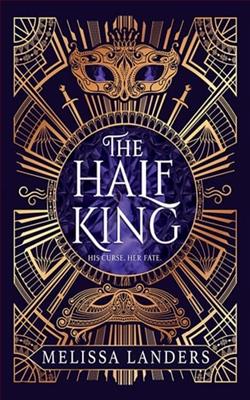
The Half King by Melissa Landers is a fantasy novel that delves into the intricate weave of politics, magic, and the undying tendrils of love. One of Landers’ most compelling works to date, this novel transports readers to the mystical realm of Acardia, where nobles control elemental magics and intrigue blooms as wild as the lush, foreboding jungles that surround their fortress cities.
At the heart of The Half King is Thalia, a headstrong princess with a fire in her soul and a kingdom on her shoulders. Born amidst prophecy and palace whispers, Thalia is not only royal but a half king—a rare and powerful figure destined to wield unmatched power in the turbulent world of Acardian politics. Her journey begins with the death of her father, the revered King Elandor, which thrusts her into an arena of vipers eager to undermine her claim and steal her throne.
Landers crafts her protagonist with both flaws and finesse, making Thalia a character readers can root for and relate to. Her struggle is palpable, her desires clear, and her mistakes, though occasionally frustrating, only serve to deepen her humanity. The author’s choice to portray Thalia’s internal conflict regarding her dual heritage—part noble, part magic-born—is both a plot device and a commentary on societal divides, adding layers of complexity to an already intricate storyline.
The narrative thrust is propelled forward by the machinations of the antagonist, Prince Varan, whose cunning and charm make him as delightful as he is detestable. Varan seeks the throne not out of greed but a twisted sense of entitlement and revenge, portrayed through backstories and motives that Landers drip-feeds with precision. This not only builds tension but enriches the plot, providing a yin to Thalia’s yang. Their interactions, brimming with sharp dialogue and unchecked tension, are among the book’s highlights.
Supporting characters, though numerous, are developed enough to not only populate the world but enrich it. From Thalia’s loyal guard, Sir Brennon, to the enigmatic healer Lirra, each character brings their own light and shadow to the canvas, painting a world as colourful as it is dangerous. The dynamics among these characters provide a strong foundation for the subplots, weaving a tapestry of betrayal, love, loyalty, and sacrifice that complements the main storyline.
The world-building in The Half King deserves a special mention. Landers skilfully crafts a world that is vast yet understandable. The elemental magic system is both unique and logically constructed, avoiding common pitfalls of over-explanation or vagueness. Each element is tied to a particular noble house, turning what could be a typical magic system into an integral part of the societal and political structure of Acardia. Historical lore, cultural norms, and environmental descriptions are painted vividly, allowing readers to immerse themselves fully in the experience.
The plot itself is a meticulously structured blend of twists and turns. Readers might predict a few revelations, but others are genuinely surprising and effectively executed. The pacing, for the most part, is taut, though some may find the middle section slightly meandering as Landers takes her time to explore character backstories and motivations. However, these seeming deviations come together in a climactic convergence that is satisfying and thought-provoking.
The novel is not without its minor blemishes. At times, the prose can veer towards the overly descriptive, particularly during intense scenes where terser descriptions might have heightened the urgency. Furthermore, the romantic subplot, though compelling, occasionally overshadows the main political intrigue, which might not sit well with all readers.
In conclusion, The Half King by Melissa Landers is an engaging foray into a lush, dangerous world where magic and motive intertwine in the pursuit of power and identity. With its robust protagonist, intriguing antagonist, and a well-crafted support cast that leaves a lasting impression, the book stands as a commendable addition to the fantasy genre. Its exploration of complex themes packaged within an absorbing narrative makes it a recommended read for those who seek more than just escapism in fantasy literature. As the first in a series, it sets a formidable stage, leaving readers eager for the next chapter in Thalia’s reign.