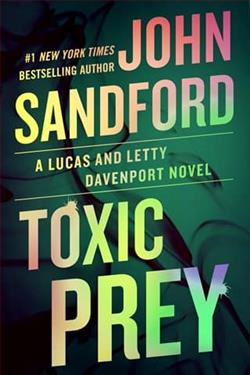
In Toxic Prey, John Sandford, a master of weaving intricate plots and gripping narratives, offers yet another relentlessly thrilling installment in his celebrated Prey series. The novel orbits around the experiences of Lucas Davenport, an astute and often unconventional investigator whose approach to law enforcement perennially skirts the edge between genius and maverick behavior. With a title that promises danger and deception, Sandford skillfully delivers on both accounts, pulling the reader into an environmentally charged mystery that feels both timely and timeless.
Set against the backdrop of Minnesota’s picturesque landscapes, which are marred by a sinister undercurrent, Toxic Prey explores an intricate environmental terrorism plot. The narrative kicks off with a series of strange, lethal incidents involving contaminated water supplies, which soon spiral into a complex web of murder, conspiracy, and betrayal. Davenport, seasoned yet continually tested by his adversaries, must navigate through layers of corruption and ambition to unearth the motives driving such heinous acts.
What sets Sandford’s writing apart is his ability to detail the procedural aspects of crime-solving without dragging the narrative into tedium. The technical descriptions of investigative processes and forensic details are meticulously researched, lending a verisimilitude to the proceedings that fans of procedural dramas will find deeply satisfying. Furthermore, Sandford’s narrative is peppered with brisk, sharp dialogue that both illuminates character and propels the plot. Davenport’s exchanges with fellow law enforcement officers, suspects, and his own inner circle are rendered with a naturalism and wit that maintain the narrative’s pace and engagement.
The character development in Toxic Prey is robust, with Sandford giving enough background to enrich the novel while preserving some mystery. Lucas Davenport himself is a compelling protagonist, portrayed with a depth that makes his genius, his flaws, and his subtleties resonate well beyond the confines of mere investigative prowess. His personal conflicts and ethical dilemmas add a rich layer to the story, challenging the reader’s perception of justice and morality. The secondary characters are also well-articulated, avoiding the trap of becoming mere caricatures. Each character introduced plays a vital role, weaving into the larger narrative arc seamlessly and significantly.
As the novel unfolds, Sandford masterfully raises the stakes, intertwining personal loss, public danger, and a ticking clock scenario that thrusts the reader into a heart-pounding race against time. The environmental angle is particularly well executed, serving as both a catalyst for the plot and a poignant commentary on the real-world implications of environmental neglect and corporate greed. This thematic depth does not overshadow the novel’s primary function as a piece of thrilling crime fiction but instead enriches it, making Toxic Prey a standout in a genre often criticized for favoring plot over substance.
One of the remarkable aspects of Sandford’s approach is his restrained use of violence. While the novel contains its fair share of action, the scenes of violence are never gratuitous but are instead impactful and serve to underline the plot's grave implications. This subtlety is a testament to Sandford's skill as a storyteller who understands the power of restraint.
The pacing of Toxic Prey is another of its strengths. Sandford manages the difficult task of keeping the reader engaged through a balance of action, dialogue, and reflection. The chapters are well-timed, with cliffhangers that compel one to turn the page without feeling manipulated. This adept control of narrative tempo is characteristic of Sandford’s style and is a significant factor in what makes his novels so consumable.
In conclusion, Toxic Prey by John Sandford is not just a thrilling crime novel but also a deep, multifaceted narrative that explores significant environmental and ethical themes. The novel’s climax, which delivers both resolution and a thoughtful return on the themes developed throughout, is satisfying on all fronts. Sandford has once again proven his ability to transcend the boundaries of typical crime fiction, offering a story that is as intellectually engaging as it is pulse-pounding. Fans of the genre and newcomers alike will find Toxic Prey a compelling addition to the literary crime landscape, a narrative rich in detail, character, and moral complexity.